
Bush Hogging
Land Cleared for Functional Use
Bush Hogging in Toney for properties with dense undergrowth and overgrown vegetation
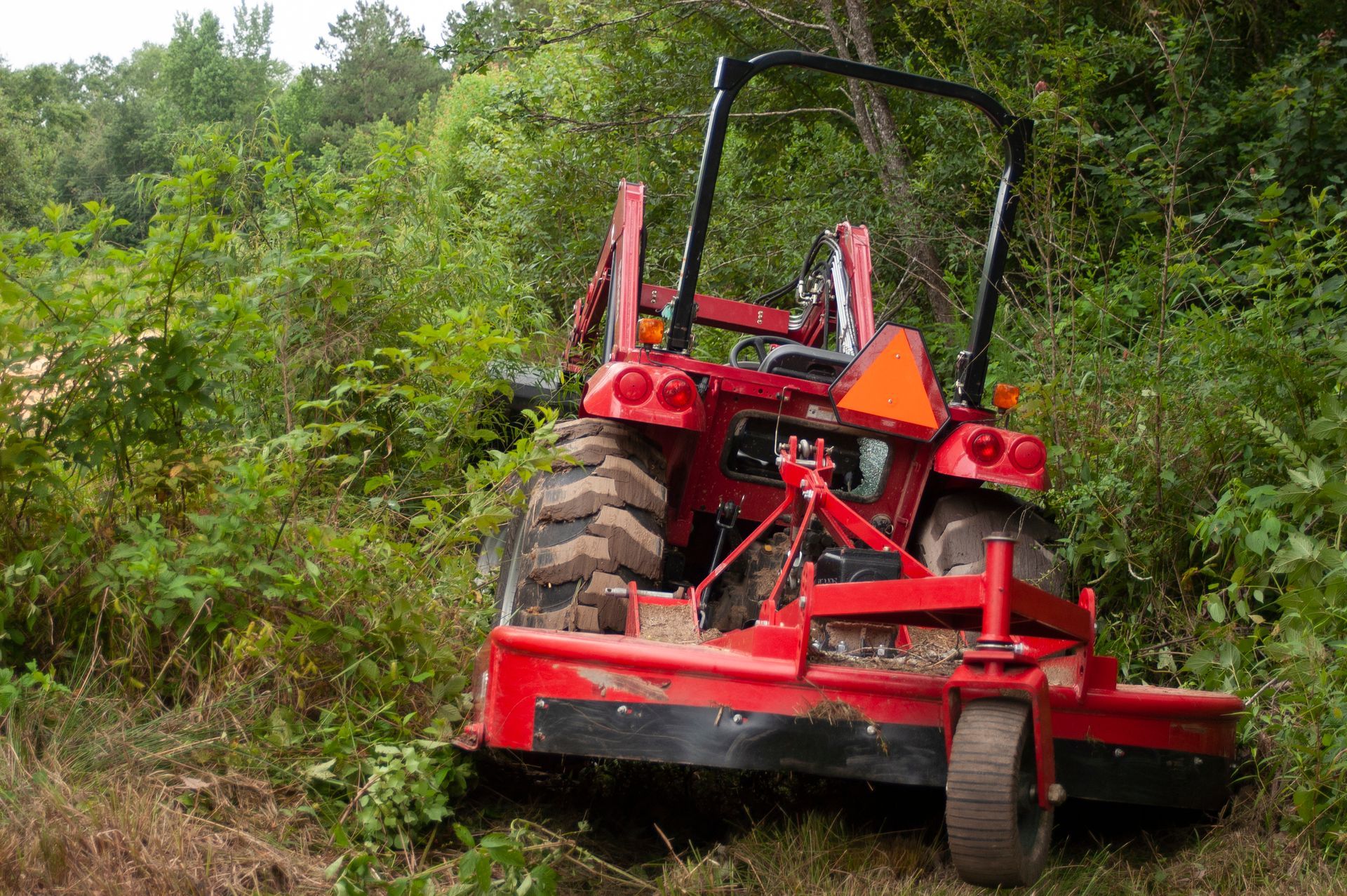
Dense bush and overgrown vegetation create more than just an eyesore on your property—they harbor pests, increase fire risk, and make land functionally unusable for agriculture, development, or maintenance access. Hernandez Land Development provides bush hogging in Toney to cut through thick overgrowth, saplings, and tall grasses that standard mowing equipment cannot handle. This service transforms neglected acreage into cleared, manageable land ready for its intended use.
Bush hogging uses heavy-duty rotary cutters mounted on tractors to shred vegetation down to ground level, handling material up to several inches in diameter including woody stems, brambles, and dense weed masses. In North Alabama, properties often face fast-growing kudzu, privet, and volunteer hardwoods that reclaim cleared areas within a single growing season if left unmanaged. The process leaves cut material on-site where it decomposes naturally, returning organic matter to the soil while eliminating the bulk and height that made the area impassable.
Schedule a site assessment to determine equipment access and cutting requirements for your acreage.
Reliable Land Development Services
We cover it all. Our team in Toney, AL, delivers efficient, safe, and high-quality work every time. Call us today!
What Happens After Bush Hogging Clears Your Land
The cutting deck on a bush hog operates differently than a finishing mower—thick blades on a floating head absorb impact from hidden rocks, stumps, and uneven terrain without damage, allowing work on rough land that would destroy lighter equipment. Operators assess the terrain before cutting to identify obstacles, slope limitations, and areas requiring multiple passes for thorough clearing. The equipment handles slopes up to a certain grade depending on soil moisture and stability, with wet conditions sometimes requiring delayed service to prevent rutting and soil compaction.
After bush hogging, you'll notice immediate visual access across the property and the ability to walk or drive equipment through areas that were previously impenetrable. The ground surface becomes visible, allowing you to identify drainage issues, property markers, fencing needs, or development opportunities that thick vegetation concealed. Wildlife patterns often shift as cover is removed, and tick populations typically decrease in cleared areas with reduced humidity and host habitat.
This service does not remove root systems, so regrowth will occur unless follow-up maintenance or herbicide treatment is implemented depending on your land management goals. Properties used for livestock benefit from rotational cutting that controls browse height while maintaining some vegetation, whereas land being prepared for construction typically requires more aggressive clearing followed by grading. Hernandez Land Development evaluates whether a single pass achieves your objectives or if staged cutting better serves properties transitioning from heavy neglect to active use.
Questions Property Owners Ask Before Clearing
Landowners in Toney often face uncertainty about equipment access, timing, and what remains after cutting is complete.
- What size vegetation can bush hogging handle? The rotary cutter manages growth up to three or four inches in diameter including saplings, thick bush, and tall grasses, though larger material may require forestry mulching or mechanical removal depending on density and species.
- How does Alabama's growing season affect when to schedule service? Cutting during late fall or winter prevents immediate regrowth and allows you to assess the cleared land before spring green-up, though summer cutting is sometimes necessary to access properties for construction or agricultural deadlines regardless of regrowth timing.
- Will the equipment damage the ground surface? Bush hogs compact soil less than bulldozers or tracked equipment, but wet conditions can create ruts, so operators evaluate soil moisture and may delay service after heavy rain to protect your land from unnecessary damage.
- What gets left behind after cutting? Vegetation is shredded and distributed across the cutting area where it decomposes naturally, reducing fire load height while leaving organic material that breaks down over several months depending on thickness and weather conditions.
- How often does cleared land need repeat service? Regrowth speed depends on remaining root systems, seed banks, and species present, with some Toney properties requiring annual maintenance while others remain manageable for multiple seasons after initial clearing based on land use intensity.
Hernandez Land Development evaluates your property's specific conditions including access points, terrain challenges, and clearing objectives to determine the appropriate approach. Request an on-site consultation to review your acreage and discuss equipment requirements for effective vegetation management.